When I first heard about the English course for writing for engineers, I wondered what it would actually cover. Would it emphasize professional development and improve my writing skills through standard essays? Or would it...
(Technical Description) Materials to Megawatts: The Chemistry and Circuitry Behind Renewable Energy Systems
Materials to Megawatts: The Chemistry and Circuitry Behind Renewable Energy Systems Ange Compere1 and Georgina Tobon-Hernandez1 1The Grove School of Engineering, The City College of New York, New York, NY Abstract Since the industrial revolution in the 1950s,...
PROPOSAL FOR CCNY’S STUDENT CENTER
Vibes and Vision: How Common Ground Will Transform the CCNY’s Experience November 10, 2025 Common Ground Force Georgina Tobon Hernandez Michelle Gadsden Edgar Azuara Karan Goswami Introduction CCNY has brought together the best of campus life—discover new food, friends,...
Reflective Essay
When I first heard about the English course for writing for engineers, I wondered what it would actually cover. Would it emphasize professional development and improve my writing skills through standard essays? Or would it be more geared at engineers? At first, I expected that the majority of my classmates would be engineering majors, but within the first two weeks, I realized that this course was open to anyone interested in learning about engineering principles while also applying professional development skills in the real world.
That purpose became clearer with our very first assignment: writing a cover letter and resume for an internship in our chosen field. While I already had some experience writing a resume through research with a professor, I had never written a proper cover letter. I wasn’t sure what to include in a cover letter, especially since I hadn’t applied to internships beyond the opportunities offered on campus. With guidance from Professor Bubrow, I learned how to craft a strong cover letter and, more importantly, I realized the value of taking initiative. This assignment pushed me outside my comfort zone to apply for internships independently. It showed me that success does not come from waiting for opportunities to arrive; you need to take initiative yourself and create your own path forward.
Following that, the second assignment challenged me to refine another essential skill: technical documentation. This time, we were tasked with writing a lab report on dice probability. I had written lab reports before and earned high grades, but they lacked the formal structure expected in professional scientific writing. For instance, I often excluded key sections such as the abstract and materials list. Through this assignment, I came to understand the importance of including these elements—not just for completeness, but for clarity and reproducibility. A well-written abstract sets the stage for the reader, while a detailed materials section ensures that the experiment can be replicated accurately. This assignment deepened my critical thinking on describing the setup, organizing results, and interpreting probability distributions in a way that was mathematically correct yet understandable to a non-technical audience. It wasn’t just about reporting numbers—it was about communicating the logic behind the experiment and the implications of the findings.
The next major assignment built on those skills but required me to apply them in a new context: writing a proposal to construct a student center at CCNY. Unlike the individual lab reports, this project emphasized collaboration, requiring our group of four to research, design, and present a proposal that addressed student needs and construction feasibility. This experience was entirely new to me, since I had never written a formal proposal before nor collaborated so closely with peers on a structured presentation, but I quickly realized that interacting with peers introduced valuable opportunities to network and learn how to communicate effectively at the college level. Throughout this assignment, I learned the value of writing concisely and strategically to bring complex ideas into a format that a diverse audience could understand, ultimately demonstrating how collaboration and clear documentation can transform abstract ideas into actionable plans.
For the final assignment, we were tasked with researching a topic related to our majors and presenting it. However, we also had the opportunity to collaborate with peers from different career backgrounds to create an innovative piece. Since I had already worked with three classmates to research, design, and present a proposal, I was prepared to pair with another engineer. Together, we presented renewable energy solutions that advocate for greener alternatives to burning fossil fuels. This experience not only introduced me to another field within my major, but it also showed me how different disciplines can intertwine. Equally important, I learned that presenting complex topics in clear, accessible terms allows people outside my major to understand the ideas and apply them meaningfully to their everyday lives.
This course has shown me that writing is not separate from engineering—it is a vital part of it. Whether drafting a lab report, designing a proposal, or presenting renewable energy solutions, clear communication transforms technical knowledge into action. I now recognize that the ability to express ideas with precision and confidence will be just as important to my future as any equation or experiment, and that presenting complex topics in clear, accessible terms allows people outside my major to understand my work, engage in meaningful conversations, and even apply those ideas to everyday decisions. Moving forward, I plan to carry these lessons into my research, internships, and professional career, knowing that strong writing is the foundation for collaboration, innovation, and leadership.
(Technical Description) Materials to Megawatts: The Chemistry and Circuitry Behind Renewable Energy Systems
Materials to Megawatts: The Chemistry and Circuitry Behind Renewable Energy Systems
Ange Compere1 and Georgina Tobon-Hernandez1
1The Grove School of Engineering, The City College of New York, New York, NY
Abstract
Since the industrial revolution in the 1950s, human activities have contributed to climate change by adding carbon dioxide (CO2) and other heat-trapping greenhouse gases to the atmosphere. These emissions have increased the greenhouse effect, a process in which certain gases trap heat and caused the Earth’s temperature to rise (EPA, 2017). In 2024, the global average surface temperature reached a record high of 2.32° F above the 20th-century average (Climate.gov, 2025). The primary human activity driving the amount and rate of climate change is the burning of fossil fuels (EPA, 2017).
Because of these impacts, the world is increasingly turning to renewable energy sources such as solar, water, and organic waste. Renewable energy reduces dependence on fossil fuels, limiting greenhouse gas emissions, and strengthens long-term energy security. Unlike coal or oil, renewable sources replenish naturally and produce far fewer environmental pollutants (International Energy Agency, 2023).
Chemical engineers advance renewable energy by designing the materials, purification systems, and chemical pathways that allow these technologies to run efficiently. Meanwhile, electrical engineers focus on converting this harvested energy into usable power and delivering it reliably to the grid. Together, these disciplines work to develop systems that capture energy from sustainable sources and ensure that it is efficiently transformed into electricity.
Solar Energy
Humans have been using the sun as an energy source for centuries. Early uses ranged from harnessing sunlight to start fires to more modern applications such as powering everyday electrical equipment (National Grid, 2023). Today, technologies like photovoltaic (PV) panels and concentrating solar- thermal power (CSP) enable us to generate electricity directly from sunlight.
Chemical Engineering in Photovoltaic Materials
Solar panels produce electricity using photovoltaic (PV) cells, which convert sunlight into electric current through the photoelectric effect. A PV cell is composed of semiconductor materials—typically silicon—that have been changed through doping, a chemical process that introduces other atoms to create regions with either excess positive or negative charge (Fraunhofer Institute for Solar Energy Systems, 2022).
Chemical engineers design and optimize several aspects of PV materials, including:
Thin–film coatings that reduce reflection and increase light absorption
Passivation layers that prevent electron recombination
Material deposition techniques (e.g., chemical vapor deposition)
Recyclingprocesses for end-of-life solar panels to recover silicon, silver, and rare metals
These advancements improve panel durability, increase efficiency, and reduce manufacturing costs (Green et al., 2021).
How Does Sunlight Become Electricity?
A photovoltaic cell (PV), commonly called a solar cell, is a non-mechanical device that converts sunlight directly into electricity. Some PV cells can also convert artificial light. When photons strike the semiconductor material, they may be reflected, pass through the material, or be absorbed. Only absorbed photons provide energy to generate electricity.
When the semiconductor absorbs sunlight, electrons are dislodged from their atoms. The movement of these electrons—each carrying a negative charge—toward the top layer of the cell creates an electrical imbalance charge between the top and bottom surfaces. This imbalance creates a voltage potential, similar to the positive and negative terminals of a battery (U.S. Energy Information Administration, 2024).
This voltage drives a direct current (DC) through the cell’s wiring. The DC electricity is then sent to an inverter, which converts it into alternating current (AC) for household and grid use (National Grid, 2023).
Hydropower
The primary source of hydroelectric power is water. Since ancient times, humans have used moving water as a source of mechanical power. In medieval societies, waterwheels powered industries such as grain and textile mills. Over time, technology progressed from mechanical waterwheels to modern systems that use water energy to generate electricity.
Water & Hydropower: Chemical Engineering in Fluid and Purification Systems
Hydropower relies on the controlled movement of water through turbines, where kinetic energy is converted into mechanical rotation and eventually electricity. Chemical engineers support hydropower systems by designing water purification, filtration, and sediment removal processes that maintain the consistent water quality required for turbine operation.
Poor water quality can lead to scaling, corrosion, or mechanical damage within turbines. To prevent these issues, chemical engineers apply principles of fluid dynamics, water chemistry, and materials selection to ensure continuous flow and long equipment lifespan (U.S. Department of Energy, 2023).
Chemical engineers also contribute to water-energy nexus research, which explores how water availability influences energy production and how modern energy systems depend on water treatment and management.
Hydroelectric Power: How Water Motion Generates Electricity
Hydropower depends on the natural water cycle, which involves three main steps:
Evaporation: Solar energy heats surface water, causing it to evaporate.
Condensation: Water vapor cools and condenses to form clouds, eventually falling as precipitation such as rain or snow.
Collection: Precipitation collects in rivers, lakes, and reservoirs, where gravity drives the flow of water downstream.
This moving water is what powers the turbines in a hydropower system. For this reason, hydroelectric power plants are built near water sources, where both the volume of water flow and the change in elevation—known as the head—determine the amount of available energy. In general, the greater the water flow and the higher the head, the more electricity a hydropower plant can generate (EIA, 2023).
As water travels through a pipe or penstock, it pushes against the blades of a turbine, causing it to spin. The spinning turbine turns a shaft connected to a generator. Inside the generator, coils of wire rotate within a magnetic field, converting the turbine’s mechanical energy into electrical energy (Water Science School, 2018).
Waste-to-Energy Electricity
The primary source for waste-to-energy (WtE) systems is municipal solid waste (MSW), commonly known as trash and garbage. Historically, people burned waste simply as a means of disposal, occasionally using the heat for basic tasks like cooking or sanitation. However, the potential to convert this heat into usable, stable electricity had not yet been realized. Today, modern WtE facilities use highly controlled and optimized systems that convert the thermal energy of burning waste into steam, and then into electric power through turbine-driven generators.
Waste-to-Energy: Chemical Processes That Convert Waste Into Fuel
Waste-to-energy (WtE) technologies transform municipal or agricultural waste into usable energy through controlled chemical reactions. A central process is anaerobic digestion, where microorganisms break down organic material without oxygen to produce biogas, a mixture primarily composed of methane (CH₄) and carbon dioxide (CO₂) (EPA, 2024).
Chemical engineers optimize several aspects of this process, including:
Pre–treatment methods that increase the efficiency of organic breakdown
Gas purification systems that remove hydrogen sulfide and moisture
Combustion processes that converting purified biogas into heat for turbines
Because methane has high energy content, WtE facilities can supply stable power while simultaneously reducing landfill waste—making this technology a growing part of sustainable infrastructure.
Waste-to-Energy: From trash to Power
A second major WtE pathway involves incineration, often called a mass-burn system, which is the most common method used today. In this process, MSW is sorted, prepared, and fed into an incinerator. The waste is burned in a controlled environment, releasing heat that boils water in a steam boiler. The resulting high-pressure steam spins the blades of a turbine generator, producing electricity.
The entire process can be understood as a chain of energy conversions:
Chemical energy (stored in waste) Thermal Energy (heat from burning).
Thermal Energy (in boiler) Thermal energy (in high-pressure steam).
Thermal Energy (steam) Mechanical Energy (spinning turbine rotor).
Mechanical Energy Electrical Energy (in the generator).
Both anaerobic digestion and mass-burn incineration demonstrate how waste—once viewed only as pollution—can be transformed into a valuable and renewable source of power.
Conclusion
Renewable energy technologies are essential for addressing climate change, strengthening energy security, and reducing dependence on fossil fuels. Chemical engineers play a critical role in developing the materials, purification systems, and chemical processes that make solar, hydropower, and waste-to-energy systems efficient and reliable. Electrical engineers complement this work by converting harvested energy into usable electricity and ensuring that power is safely delivered to homes and the grid. Together, these disciplines drive the transition toward cleaner and more sustainable energy systems. As global demand for energy continues to rise, the combined efforts of chemical and electrical engineers will remain vital in shaping a more resilient and environmentally responsible future.
References
Abalasei, M. E., Toma, D., Dorus, M., & Teodosiu, C. (2025). The impact of climate change on water quality: A critical analysis. Water, 17(21). https://doi.org/10.3390/w17213108
Fraunhofer Institute for Solar Energy Systems. (2022). Photovoltaics report. Fraunhofer ISE.
Green, M. A., Dunlop, E. D., Hohl-Ebinger, J., Yoshita, M., Kopidakis, N., & Hao, X. (2021). Solar cell efficiency tables (Version 57). Progress in Photovoltaics: Research and Applications, 29(1), 3–15. https://doi.org/10.1002/pip.3371
International Energy Agency. (2023). World energy outlook 2023. IEA.
Vibes and Vision: How Common Ground Will Transform the CCNY’s Experience
November 10, 2025
Common Ground Force
Georgina Tobon Hernandez
Michelle Gadsden
Edgar Azuara
Karan Goswami
Introduction
CCNY has brought together the best of campus life—discover new food, friends, and resources at your new student center. Yet despite its rich academic and cultural environment, The City College of New York (CCNY) lacks a centralized space that meets the academic, social, and wellness needs of its diverse student body. Students move between crowded lounges and disconnected study areas that do not support teamwork or belonging. This proposal advocates for the creation of Common Grounds, a sustainable and wellness-oriented student center designed to integrate technology, comfort, and inclusivity—fostering collaboration, community engagement, and academic success.
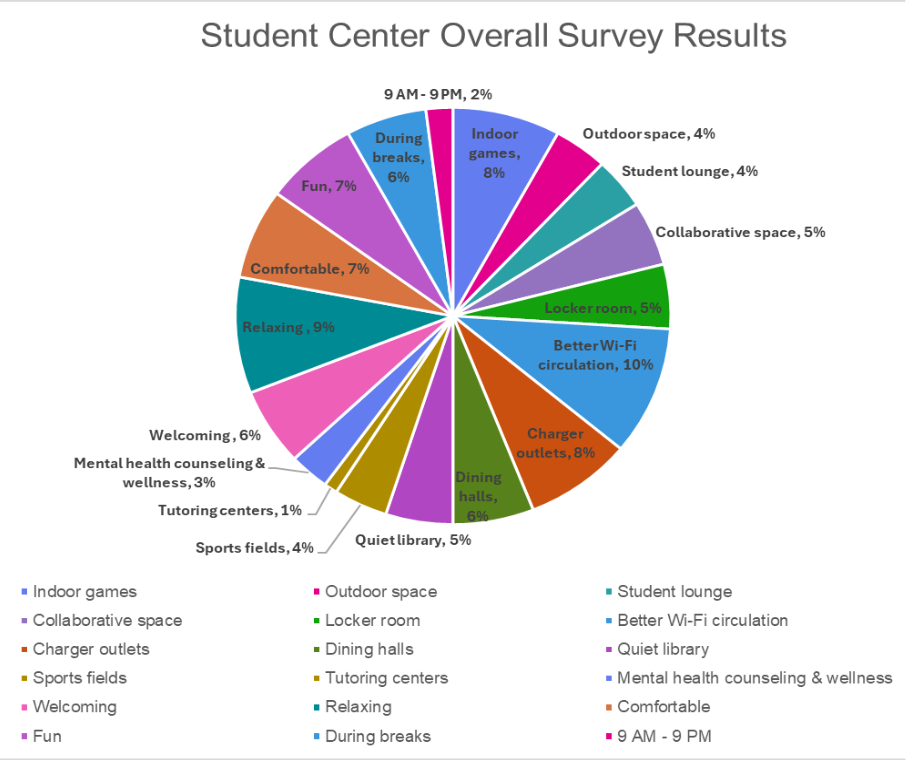
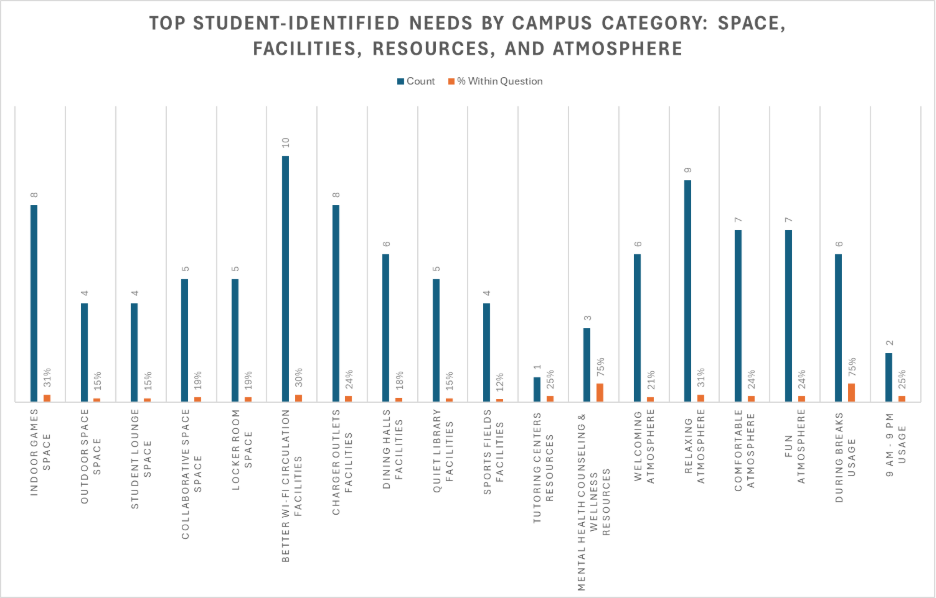
To ensure the new student center meets the needs of the campus community, a survey was conducted to identify students’ priorities for space, facilities, resources, atmosphere, and overall usability. The results, visualized in the pie chart below, revealed a strong demand for improved Wi-Fi connectivity, collaborative and relaxing study areas, and access to wellness resources. These findings underscore that CCNY students value a balance between productivity and well-being in a shared campus environment (See Appendix for complete survey data, Fig 2).
Figure 3. Distribution of Student Preferences for the Proposed CCNY Student Center The chart summarizes overall survey responses, illustrating the most requested features and amenities students wish to see in the new student center.
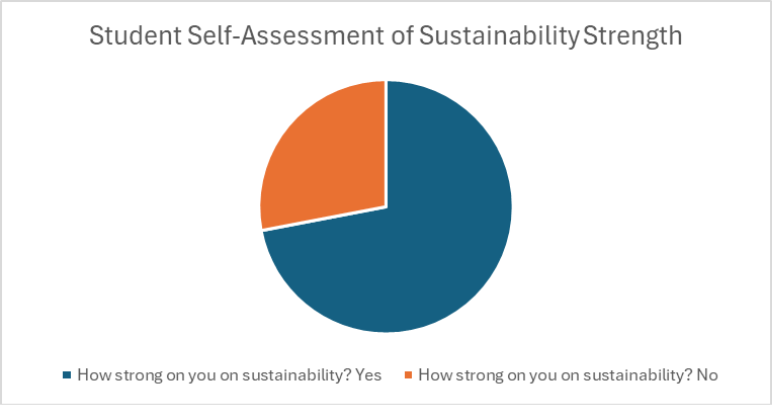
An additional survey was conducted to evaluate students’ interest in sustainable design practices for the proposed building. Out of 100 participants, 72% agreed that sustainability should be a guiding principle in the student center’s design and execution, while 28% said it was not a priority. This strong majority shows that CCNY students are not only interested in functionality and comfort, but also in environmentally conscious innovation that reflects the university’s commitment to a green future (See Appendix, Figure 4 and Figure 5, for complete sustainability survey data).
Further supporting this need, the 2024 CUNY Student Experience Survey reported that only 59% of students across community colleges were satisfied with their social experience and just 67% felt a sense of belonging at their institution. Additionally, 59% of students indicated spending no time taking part in campus activities (City University of New York Office of Institutional Research and Effectiveness, 2025). These results highlight a broader trend across CUNY—students lack an adequate space to build connections and engage outside the classroom.
Together, both data sources point to the same conclusion: CCNY students need a central hub that strengthens social ties, supports mental health, and enhances academic engagement. Common Grounds will answer that need by transforming campus life into an inclusive, connected, and student-centered experience.
Action Plan
Inspired by Herman, Thompson, and Violich (n.d.), the CCNY “Common Grounds” Student Center is envisioned as a connective hub that promotes belonging and collaboration across campus life. This action plan outlines how the center will integrate academic, social, and wellness functions in a modern, inclusive space.
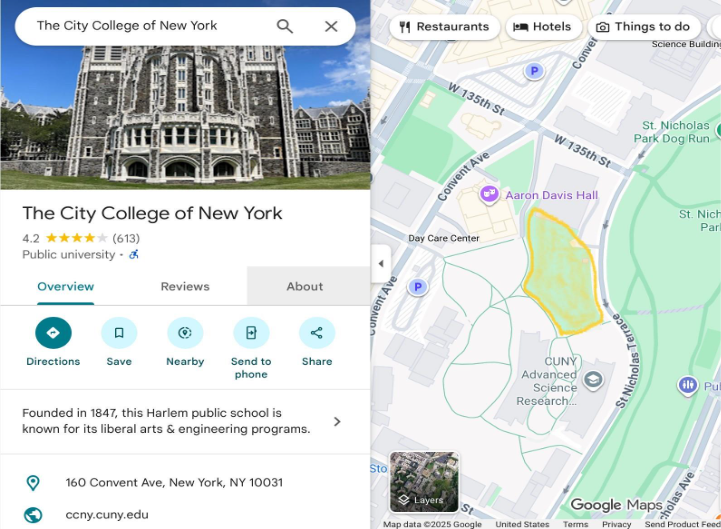
Proposed facility location
Figure 6. CCNY’s Campus obtained by Google Maps
Site: CCNY campus, 160 Convent Ave, New York, NY 10031.
Approx. Area: 935 sq ft x 5 levels = 4,675 sq ft total approximate gross area
Research on student centers shows that accommodating an ever-changing student body requires adaptable services and flexible design features. The survey conducted for this proposal accurately represents the diverse student body at CCNY, including commuters, non-traditional students, and seniors. This contributes to the student-centered goal of creating a space that supports collaboration, encourages healthy academics and personal growth, and provides adaptable essentials to meet future academic and social needs.
In addition, research by Nalongo (2024) shows that thoughtful school design directly influences student engagement, emotional wellness, and learning outcomes. This finding supports the idea that Common Grounds will incorporate natural light, comfortable spaces, and open circulation areas to enhance both mental and academic performance.
The building’s design offers a welcoming approach that connects students to one another, to campus services, and to the broader campus community. The center will make it easier for students to study, eat, relax, and access counseling and tutoring services. This concept aligns with the understanding that a student center acts as a connective hub within the campus ecosystem.
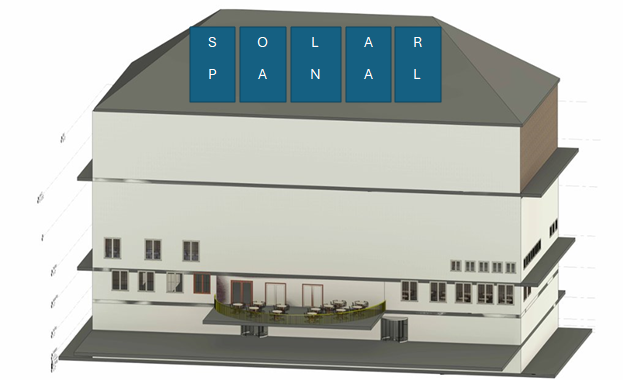
The proposed four-story structure with a basement—centrally located on the CCNY campus—will serve as a flexible hub for study, collaboration, recreation, and wellness (See Appendix for 3D Building Structural, Figure 7). Each level is designed with student input and sized for adaptability within approximately 935 sq ft per floor. Programed elements can be arranged vertically and through multi-use furniture, consistent with evidence that flexible spaces foster creativity and engagement (Nalongo, 2024).
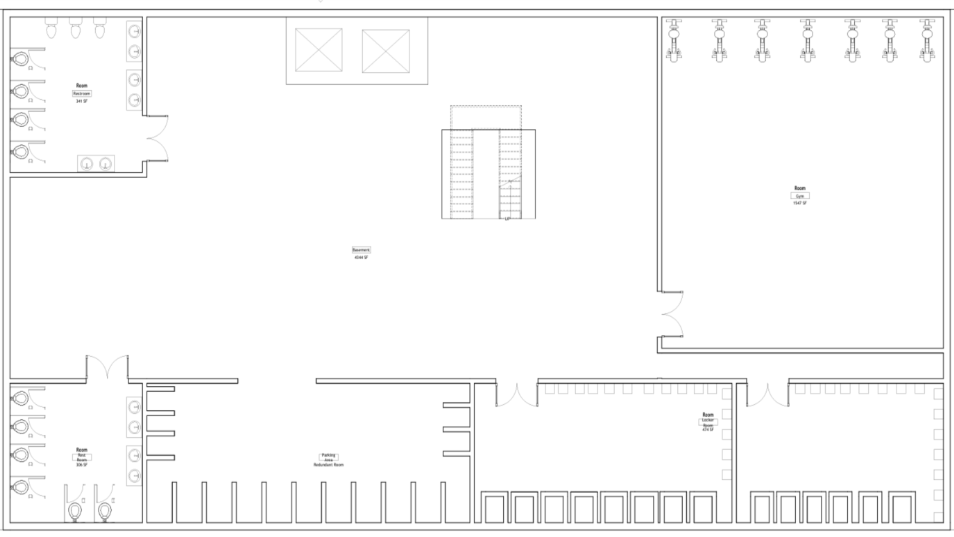
The diagram below shows the basement layout, featuring the gym, event space, and secure storage areas.
Figure 8. Basement floor plan of the Common Grounds Student Center.
Gym, event space, secure student storage, bike racks, building mechanicals, staff storage, and small changing/shower rooms for athletes or commuters.
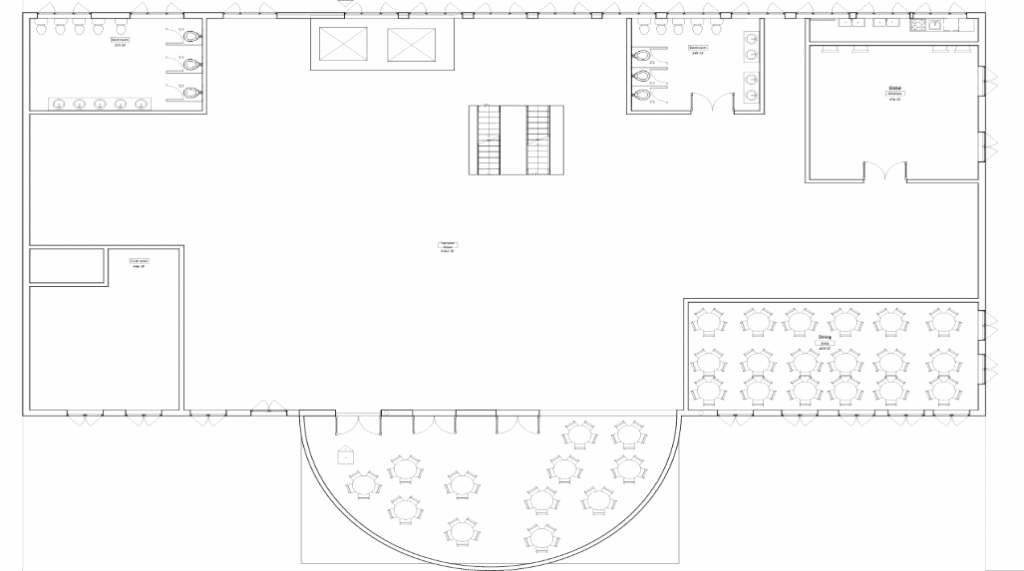
The layout below illustrates the design and key features of the first floor.
Figure 9. First floor plan of the Common Grounds Student Center.
1st Floor (Public hub, Resource Center, Welcome Center, Security, outside dining +lounge):
Lobby with a welcome center, resource center, security/monitoring station, indoor/outdoor modular seating, small international dining or grab-and-go kiosk, public notice boards, and event poster wall.
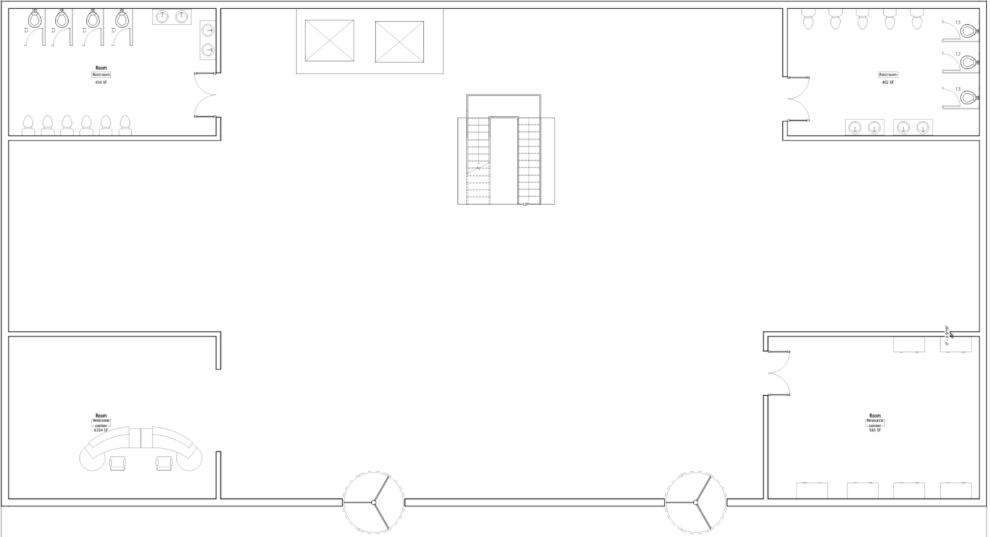
The following plan highlights the arrangement of dining and student organization spaces on the second floor.
Figure 10. Second floor plan of the Common Grounds Student Center.
2nd Floor (Full international dining & student organizations space):
Plaza-style international dining area, modular student lounge with flexible seating for group meetings, reservable group meeting rooms (4-25 people), charging stations, and upgraded Wi-Fi access points.
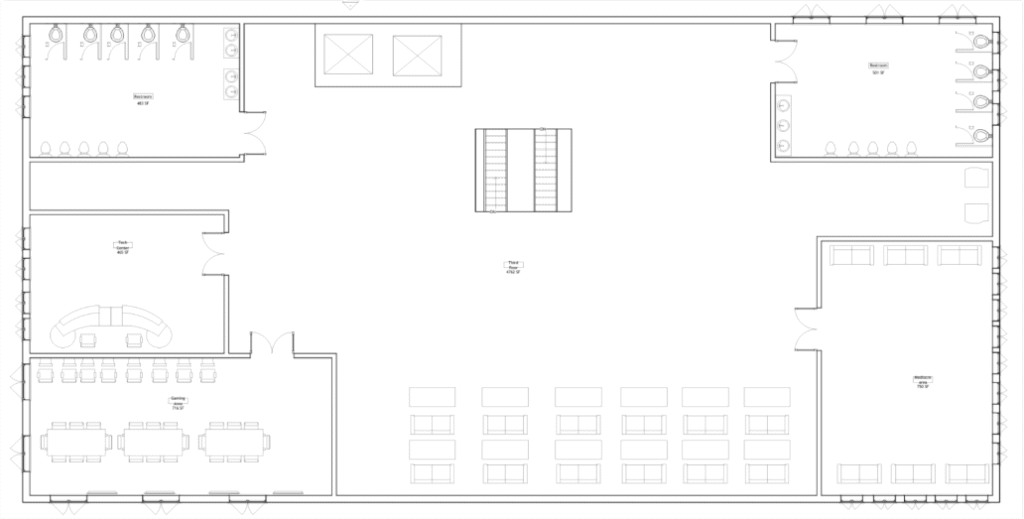
Shown below is the third-floor layout, which focuses on academic and technology support areas.
Figure 11. Third floor plan of the Common Grounds Student Center.
Academic support tutorial center with tutoring stations, computer/printing stations, tech support, gaming area, and media center.
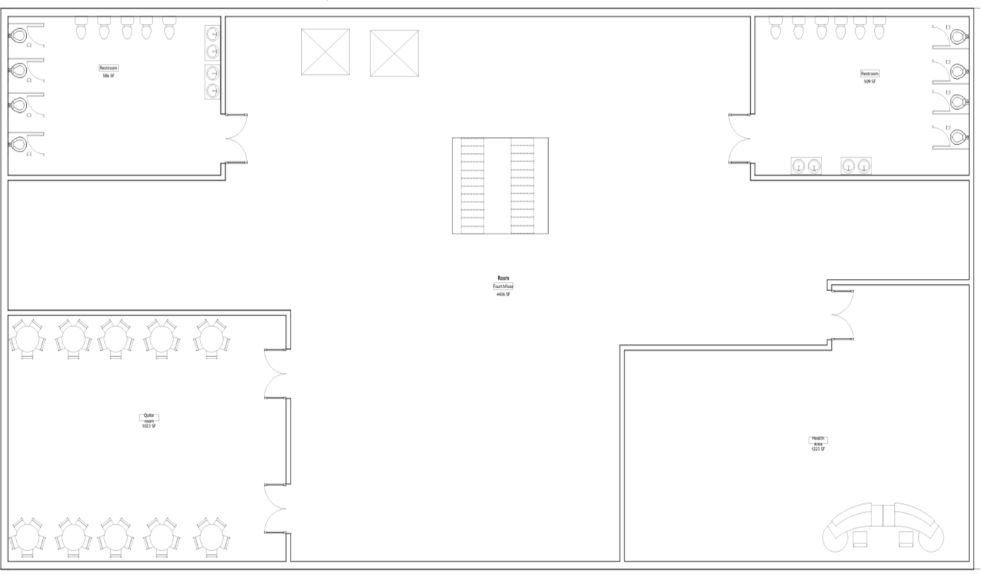
The final plan presents the fourth floor, emphasizing wellness, leadership, and quiet study spaces.
Figure 12. Fourth floor plan of the Common Grounds Student Center.
4th Floor (Wellness & leadership):
Wellness counseling suites, quiet library nook with individual study carrels, computer/printing stations, mediation/quiet room, reservable group meeting space for faith-based organizations, and office space for student affairs and student organization advisors.
The rooftop plan, which highlights the green roof features informed by the sustainability survey and overall structural design, will be presented in Appendix B.
Construction Timeline: CCNY “Common Grounds” Phased Implementation
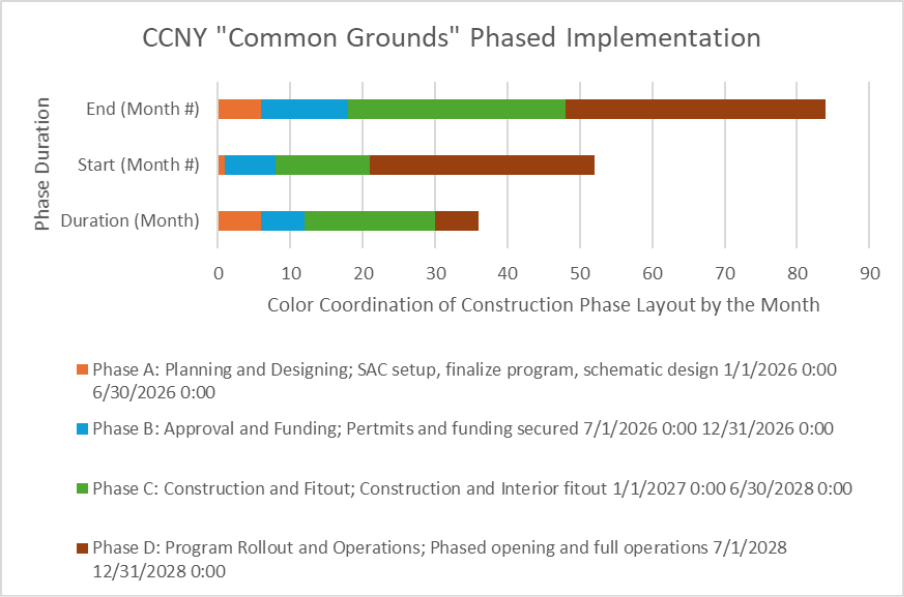
The construction phase will be implemented in four main phases over three years, as outlined below.
Phase A – Planning & Design (Months 0-6)
A Student Advisory Committee (SAC) will be established, consisting of representative students by major, year, commuter/resident status, one faculty representative, and one administrator. The SAC will refine priorities from the 100-student survey, run focus groups, and approve final programming. An architect or firm in urban student centers will develop schematic floor plans, an accessibility plan, and the sustainability checklist. The outcome will be an approved schematic design and preliminary cost estimate.
Phase B – Approvals & Funding (Months 6-12)
During this phase, campus planning and permit documents will be submitted to CCNY facilities and the NYC Department of Buildings for approval. The SAC will launch a funding plan combining student activity reserves, targeted alumni outreach, local grants, and potential corporate sponsorship for named spaces (e.g., Benny’s Lounge). The goal is to secure funding commitments and permits.
Phase C – Construction & Fitout (Months 12-30)
A contractor will be selected through competitive bids. Construction will include site preparation, structural work, the building core and shell, interior partitions, MEP (mechanical/electrical/plumbing) installation, and technology integration. Near the end of this phase, furniture, appliances, kitchen equipment, tutoring area shelving, and wayfinding signage will be installed. The outcome will be a completed building ready for inspection.
Phase D – Program Rollout & Operations (Months 30-36)
After inspection approval, SAC will conduct soft opening events such as weekend pop-up events, tutoring sessions, and wellness program introductions. This will allow for user feedback and adjustments to programming before a full opening that includes orientation events, student organization fairs, and wellness awareness days. The outcome is a fully operational facility with student-led programming.
The following Gantt chart (Figure 9) visually summarizes the planned timeline and duration of each construction phase described above.
Figure 13. Common Ground Phased Construction Plan
Student Leadership and Governance
Student involvement will remain at the core of operations. The Student Advisory Committee (SAC) will oversee governance, manage tutoring and study space schedules, and organize monthly programs. A student programming fund—supported by usage revenue or campus activity fees—will finance events such as Benny/Bennie the Beaver nights, cultural celebrations, and tutoring incentives. Designing the center with active student leadership ensures the facility stays dynamic, responsive, and engaging.
Technology, Accessibility, and Safety
The technology and infrastructure phase will include comprehensive Wi-Fi mapping for all levels, with 6-8 charging stations per floor. Contractors will install an enterprise-level Wi-Fi backbone capable of supporting peak usage in lobbies, dining, and study areas. Additional features may include digital room-booking panels for reservable spaces. The SAC will organize ongoing student-run “Tech Help” hours in the tutoring center for device support.
The center will fully comply with ADA accessibility standards, including an elevator sized for a stretcher, tactile signage, and hearing-assistance systems in event rooms. Safety features will include clear egress routes, 24/7 security camera coverage (excluding private counseling rooms), and well-lit exterior entrances. Sustainability elements will prioritize LED lighting, energy-efficient HVAC systems, low-flow fixtures, and green areas or planter boxes if structurally feasible—aligning with best practices for sustainable student hubs.
Assessment and Continuous Improvement
SAC will measure success through Key Performance Indicators (KPIs) focused on student engagement. These include weekly lounge/study area utilization counts, monthly program participation, and attendance in tutoring and wellness sessions. Academic impact will be evaluated through tutoring appointment data and self-reported GPA improvement. Student satisfaction will be assessed quarterly through short surveys. SAC will also monitor commuter versus resident usage and time-of-day access patterns to ensure equitable availability.
A Student Assessment Committee will maintain oversight to ensure risks and mitigations are managed effectively. Funding shortfalls will be mitigated by phased openings (e.g., launching one or two floors initially) and continued pursuit of alumni and grant support. Space limitations will be addressed with flexible furniture and reservable zones, allowing areas to serve multiple purposes throughout the day.
This Action Plan places students at the center—from design and construction to programming and long-term governance. The CCNY Common Grounds Student Center will not only stand as a physical space at 160 Convent Ave (40.816853, –73.950589) but also as a living, evolving program of events, tutoring, and student support designed to connect people, services, and ideas across campus. This approach follows established planning principles showing that student life hubs strengthen campus connectivity when they are designed and governed with students in the lead.
Costs and Benefits
The estimated budget for the Common Grounds Student Center outlines the projected costs needed to bring this vision to life—from planning and design through final inspection and opening. The breakdown below highlights each construction phase and its corresponding expenses, reflecting a realistic investment in a long-term, student-centered facility.
Item
Cost (U.S. Dollars)
Pre-Construction
$12,760,000
Construction
$25,520,000
Post-Construction
$4,250,001
Materials/Technology
$150,000
Estimated Total
$ 42,650,000
Table 14. Estimated Budget Breakdown for the Common Grounds Student Center
Following the estimated budget, it is also crucial to consider the long-term value this investment will bring to CCNY students and the campus community. A student center plays a vital role in enhancing campus life by fostering student engagement, collaboration, and belonging. It provides space for studying, socializing, and taking part in activities that help students develop leadership and communication skills outside of class (Association of College Unions International, 2023). These centers not only strengthen community connections, but they also improve academic performance by offering areas that encourage teamwork and personal learning. Additionally, student centers contribute to overall well-being by creating welcoming and comfortable environments that reduce stress and improve mental health (American College Health Association, 2024). Together, these benefits make a student center an essential part of a supportive and engaging college experience. And, honestly, who wouldn’t appreciate having a quiet place to relax without being disturbed by a loud group of friends nearby, especially that one friend whose laugh can be heard across the library?
Note. Budget data and cost estimates were informed by multiple sources analyzing current construction trends and pricing in New York City (Citizens Budget Commission, 2025; NYC Estimating Services, 2025; Building Design + Construction, 2024).
Conclusion
The CCNY’s Common Grounds Student Center project is more than just a new building; it is an investment in the core of the CCNY community. By combining study, social, and wellness facilities under one roof, this proposal immediately addresses the gaps identified in both campus survey and citywide CUNY data. Students will have a central location to interact, recharge, and connect with essential resources that promote academic success and personal growth. Building this student center will not only increase the sense of belonging and engagement on campus today, but it will also create a legacy: a vibrant, sustainable space that will continue to shape the future of CCNY for generations to come.
Our team—Common Ground Force
Georgina Tobon Hernandez is a second-year Chemical Engineering student where she combines technical rigor with a passion for sustainable development and student advocacy. With a solid foundation in experimental research, data analysis, and scientific communication, she has led initiatives that connect engineering principles with community-centered solutions. Outside of campus, she spends time outdoors, which highlights her commitment to create environments that inspire curiosity, foster connection between nature and individuals, and reflects the diverse needs of her peers. She plans to involve herself in the pharmaceutical field, changing the approach of how vaccines are produced.
Edgar Azuara is an extremely enthusiastic Computer Scientist with a specialty in making very innovative sites and keeping every task neat and clear with no confusion about what needs to be done. When there’s organization and clarity on what needs to be done, it’s absolutely meaningful to be extremely sure each and every task is done. He plays Soccer in his free time, and the matches are exceptionally long and exhausting, which helps with the idea of being able to persevere through something and still show his best during it. In the future, he is excited to see what websites he will make to influence the new forms of Media in daily life.
Michelle Gadsden is a driven Business Management and Administration major at CCNY with a passion for organization, leadership, and innovation. She enjoys coordinating projects, improving workflows, and supporting team success through clear communication and thoughtful planning. With a strong interest in Engineering and Technology, Michelle is dedicated to combining organizational strategies with innovative problem-solving to enhance processes and support technical projects. Her blend of analytical thinking, creativity, and collaboration allows her to develop efficient, goal-oriented solutions across diverse teams. Outside of academics, she spends her days with her playful cat, Nico, whose curious personality brings balance and warmth to her focused approach both in study and at home. Her future will consist of entrepreneurship and enterprise ownership.
Karan Goswami is a creative engineer with a specialization in structure design. He believes the smartest solutions come from combining deep technical ability with confidence, imaginative design, and mind. His commitment to physical fitness through badminton sharpens my focus and provides the endurance needed to tackle complex problems and long-term projects. He is dedicated to turning his ambitious thoughts and dreams into reality by working hard. In the future, he is planning to become a structural designer engineer where he will focus on new creative structural impact.
References
Association of College Unions International. (2023). The role of the college union in campus life. Retrieved from https://acui.org
American College Health Association. (2024). Promoting well-being through campus design. Retrieved from https://acha.org
Building Design + Construction. (2024). K-12 school construction costs for 2024. Retrieved from https://www.bdcnetwork.com
Citizens Budget Commission. (2025). Why it costs so much to build in New York City. Retrieved fromhttps://cbcny.org
Table 2. Summary of student preferences for campus spaces, facilities, resources, atmosphere, and usage patterns, based on 100 responses. (pg.2)
Figure 2. Bar chart illustrating the highest-priority responses within each category of campus needs. Students most frequently emphasized better Wi-Fi (30%) under facilities, mental health counseling under student resources (75%), and relaxing atmosphere (31%) under environment as key areas for improvement. (pg.2)
Responses
Count
How strong on you on sustainability?
Yes
72
No
28
Figure 4. Summary of student self-assessed opinion on sustainability, with 72 affirming and 28 not affirming strong engagement. (pg.4)
Figure 5. Distribution of student responses to the question “How strong are you on sustainability?” showing a majority (72%) feel strongly on sustainability. (pg.4)
Figure 7. Rooftop plan and building structural overview for the Common Grounds Student Center. (pg.6)
Note. The figure illustrates the green-roof concept informed by student sustainability preferences, as well as the overall structural layout of the proposed five-level building.
Rolling the Odds: Experimental and Theoretical Analysis of Dice Sum Distributions
Abstract This experiment compared the observed and theoretical probability distributions of sums obtained from 100 rolls of two six-sided dice. The results closely matched the theoretical model, particularly sums close to the expected median value, such as 7, with slight differences due to randomness and sample size. The results were also compared to a peer-reviewed study on dice probability, which showed that probabilistic models accurately represent independent random systems, highlighting the usefulness of probabilistic methods in research studies.
Introduction Probability theory offers a framework for predicting outcomes in random occurrences. Dice are a straightforward way to explore both theoretical and experimental probability because each roll is random and unbiased. This experiment aims to compare observed frequencies (how often each outcome appeared) with theoretical expectations and analyze the distribution of sums from rolling two dice. Hypothesis: The experimental probability distribution (pattern showing how likely each sum is) will closely resemble the theoretical distribution (mathematically predicted results), with the sum of 7 occurring the most often.
Materials ▪ Two fair six-sided dice ▪ Data recording sheet or spreadsheet ▪ MATLAB software for simulation and visualization ▪ Calculator or statistical software (optional)
Procedure
Simultaneously roll both dice, then note the sum of the individual values.
Repeat for 100 trials.
Calculate how often each of the possible sums (2–12) occurs.
Compare experimental probabilities with theoretical probabilities calculated from 36 possible combinations
Results The results of 100 dice rolls were recorded and analyzed to calculate the frequency and probability of each possible sum. The data below shows the observed distribution and compares it to the theoretical probability derived from typical combinations.
Table 1: Frequency and Probability of Dice Sums (100 Trials)
Sum
Frequency
Experimental Probability
Theoretical Probability
2
2
0.02
1/36 ≈ 0.028
3
5
0.05
2/36 ≈ 0.056
4
7
0.07
3/36 ≈ 0.083
5
9
0.09
4/36 ≈ 0.111
6
12
0.12
5/36 ≈ 0.139
7
17
0.17
6/36 ≈ 0.167
8
14
0.14
5/36 ≈ 0.139
9
11
0.11
4/36 ≈ 0.111
10
10
0.1
3/36 ≈ 0.083
11
8
0.08
2/36 ≈ 0.056
12
5
0.05
1/36 ≈ 0.028
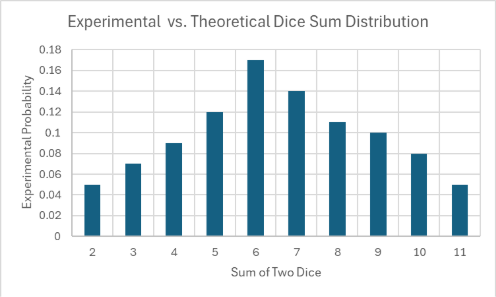
Figure 1: Experimental vs. Theoretical Probability Distribution
Bar graph comparing observed probabilities from 100 dice rolls with theoretical expectations for sums 2 through 12.
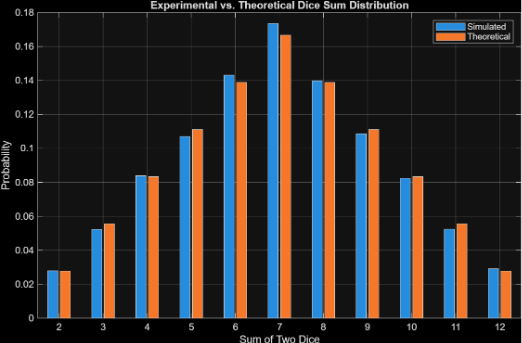
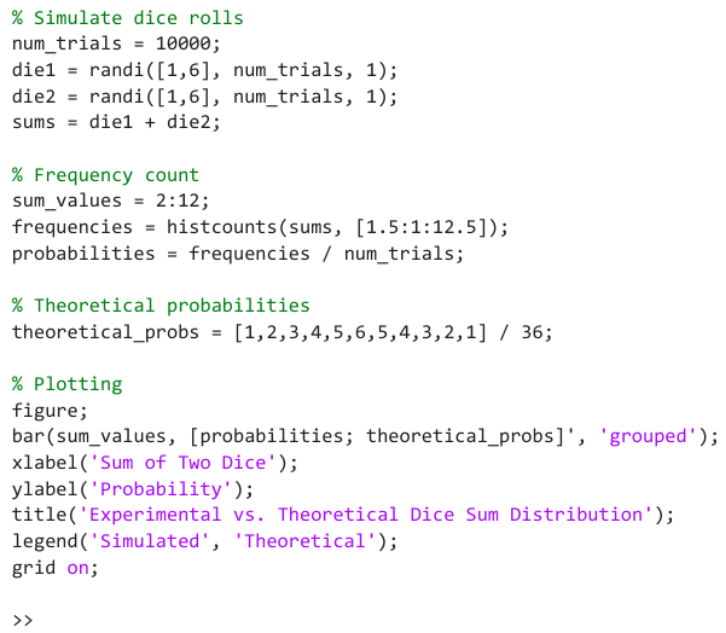
To verify the experimental results, a MATLAB simulation of 10,000 virtual dice rolls was run. The code (see Appendix B: MATLAB Simulation Code) generated two random integers between 1 and 6 for each trial, simulating the dice roll. The probability distribution was determined by adding the sums of each pair and calculating frequencies. This simulation allowed comparisons of large-scale outcomes with both theoretical expectations and a smaller experimental dataset, showing the consistency of probabilistic modeling.
Figure 2: MATLAB-Simulated Dice Sum Distribution (10,000 Trials)
Grouped bar chart comparing simulated probabilities with theoretical values for sums ranging from 2 to 12.
Analysis
The experimental data from 100 dice rolls strongly supported the initial hypothesis: that the sum of 7 would occur most often, matching its theoretical probability of 6/36 ≈ 0.167. The observed frequency for 7 was 17%, which closely matched predictions. Other sums, such as 6, 8, and 9, appeared at frequencies close to their theoretical values. Minor differences were found for less common sums such as 2 and 12, which appeared somewhat more or less often than expected. These small differences likely happened because the experiment only used 100 rolls, and manual rolling naturally introduces variation, especially rare outcomes.
The findings were compared to those presented in “New Prospective on Multiple Dice Rolling Game and Its Statistical Implications” by Claver et al. (2017). Their study used a probabilistic model with Chapman-Kolmogorov equations to simulate dice outcomes over numerous trials. They found that the probability distribution stabilizes with larger sample sizes, especially around median sums 6, 7, and 8. The experimental data from this experiment supports their conclusion that even small-scale trials follow the same theoretical pattern, but with greater fluctuation.
The MATLAB simulation, which modeled 10,000 virtual dice rolls, confirmed the experimental and theoretical distributions. The simulated frequencies closely matched the theoretical probabilities with minimal variation across all sums. When compared to the Claver et al. study, the MATLAB results supported the idea that large-scale simulations generate distributions identical to theoretical models. The computer simulation supported the hypothesis and showed how well computer simulations can mirror and extend what we see in real experiments. The manual experiment and MATLAB simulation together provide a thorough understanding of dice probability, connecting hands-on experimentation with statistical modeling.
Conclusion
This experiment investigated the probability distribution of sums obtained by rolling out a pair of six-sided dice over 100 trials. The main goal was to measure how closely the observed frequencies matched theoretical expectations. The results confirmed the hypothesis: the sum of seven appeared the most often, which corresponded to its highest theoretical probability. Other sums followed expected patterns, with slight differences due to sample size and expected randomness.
To support these findings, the experimental data were compared to a peer-reviewed study on dice probability modeling, which showed that classical probability distributions accurately describe random systems. A MATLAB simulation of 10,000 virtual dice rolls was also conducted, producing a distribution that was nearly identical to the theoretical model and confirming the law of large numbers.
These results show that probability theory does a reliable job of predicting random outcomes and open ideas for future experiments. Future research could investigate biased or weighted dice, compound probability scenarios, or larger sample sizes. The results of this experiment can be used to support educational demonstrations, guide game design, or serve as the foundation for more advanced statistical modeling in engineering and applied mathematics.
References
Claver, J. H., Azimi, J., & Suzuki, T. (2017). New Prospective on Multiple Dice Rolling Game and Its Statistical Implications. American Journal of Applied Mathematics and Statistics, 5(5), 169–174. https://pubs.sciepub.com/ajams/5/5/3/index.html
Email us at [email protected] so we can respond to your questions and requests. Please email from your CUNY email address if possible. Or visit our help site for more information: